
July 2, 2026

Just launched and not showing up on Google? Here's why your website isn't ranking yet, how to check if you're indexed, and the fastest ways to fix it.

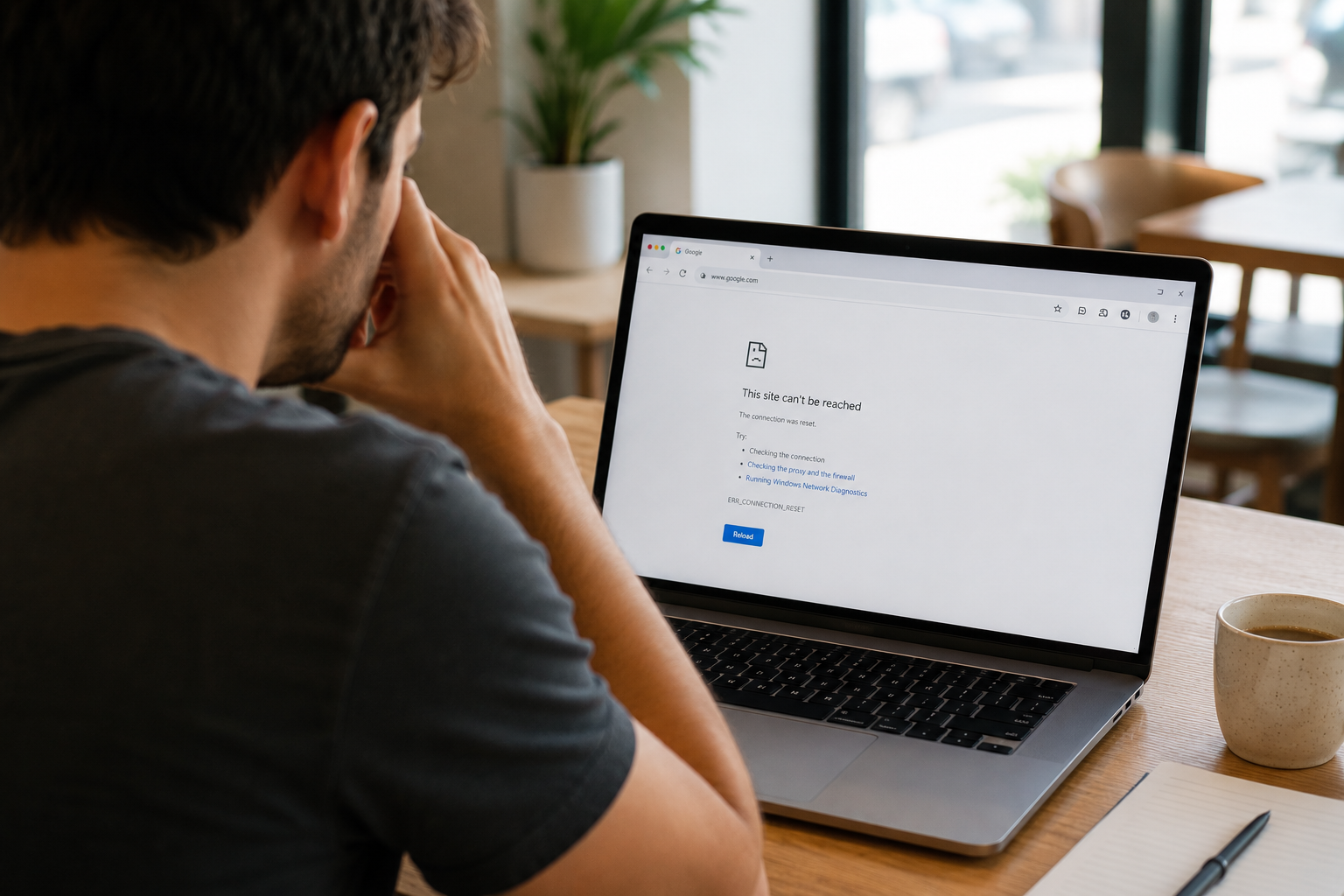
Asking why your website is not showing up on Google is one of the most common questions new site owners have, and most of the time the answer is far less alarming than it feels.
Let me walk you through it the way I would with a client. We start with the likeliest, most harmless explanation, then work toward the real problems if those turn out not to apply.
If your site went live in the last 48 hours, or even the last seven days, there is probably nothing wrong at all.
Google has to discover that your website exists before it can show you in results. Its crawlers need time to find your pages, read them, and add them to the index. That process is rarely instant.
For a brand new site, give it time. Indexing can take a few days, and in some cases up to 30 days, before you reliably show up. So if you launched this week, the honest answer is usually to wait a little longer.
Here's the first real question. Did you optimize the site for search engines when you built it? That means filled-in title tags, clear page names, clean URLs, and headings that tell Google what each page is about. If those basics are in place and your business has some history, you should surface within that 30-day window.
If they're missing, that's your first fix. Open your website platform's SEO settings and make sure every page has a real title tag and a Heading 1 tag that describes its content. Google can't rank a page it can't understand.
Before assuming the worst, run a quick test. Go to Google and search site:yourdomain.com, swapping in your actual domain. This shows you every page Google has indexed for your site.
This is the distinction that trips most people up.
The two requires twodifferent fixes.
If it's been a couple of weeks or more and you're still invisible, here are the usual culprits, in the order I'd check them.
1. Your site is brand new and just needs more time. If the URL is live and you haven't touched anything technical, this is the most likely answer. Google simply hasn't crawled you yet.
2. You never set up proper SEO titles and headings. Without them, Google struggles to understand what your content is about. Head into your platform's SEO settings and fix this before anything else.
3. You accidentally blocked the crawlers. If you, or whoever built the site, configured a robots.txt file or left a "noindex" tag in place, you may have told Google's bots to skip your site entirely. For most people this doesn't apply, since it only happens when someone changes it on purpose. It's still worth checking. You can confirm exactly how Google sees a page with the URL Inspection tool inside Google Search Console.
4. Your site has no history yet. A brand new URL, or a brand new business name nobody has searched for, gives Google very little to go on. If people aren't searching for your brand or the topics around your product, it can take longer for Google to find and trust you organically.
If all of the above checks out and you're still missing, the issue is usually that your website doesn't have a clear entity yet. In plain terms, Google doesn't have enough signals to recognize your brand as a real, established thing. I go deeper on what an entity is and why it matters in this piece on entities and AI search.
Each of these gives Google another reason to believe your business exists and deserves a place in results.
This is the most direct move on the list. Create a Google Search Console account, verify ownership of your site, and submit your sitemap. Most platforms generate one for you at yourdomain.com/sitemap.xml, so grab that link and add it in Search Console.
Here's why it matters. You're directly asking Google to index your site, rather than waiting for it to find you on its own.
Note: Requesting indexing and getting indexed are two different things, but the request puts you in line. Once Google gets to your site, it decides whether the content is worth indexing, which it usually is, as long as your pages are clear about what you offer and aren't thin or low quality.
Sometimes you do show up on Google, but under the wrong search terms, or with the wrong business industry or details, because those things were never optimized at launch. That's a different problem from being invisible, and it's easy to miss on your own.
This is where a proper SEO strategy earns its keep. A specialist can look under the hood, run a full SEO audit, find what's holding you back, and do the work to get you ranking for the terms that actually bring in customers.
If you'd like a specialist to take that look for you, that's what we do at Colibri Systems. Reach out and we'll help you pin down exactly why your site isn't showing up, and what it will take to fix it.

.jpg)