AI search is the new land grab for online discovery. The businesses that learn how to rank inside AI-powered search engines, ChatGPT, Gemini, Claude, and Perplexity, will be the ones receiving the high-intent opportunities everyone else misses. At Colibri Systems, we help small businesses get found, quoted, and referenced in this new era of search.
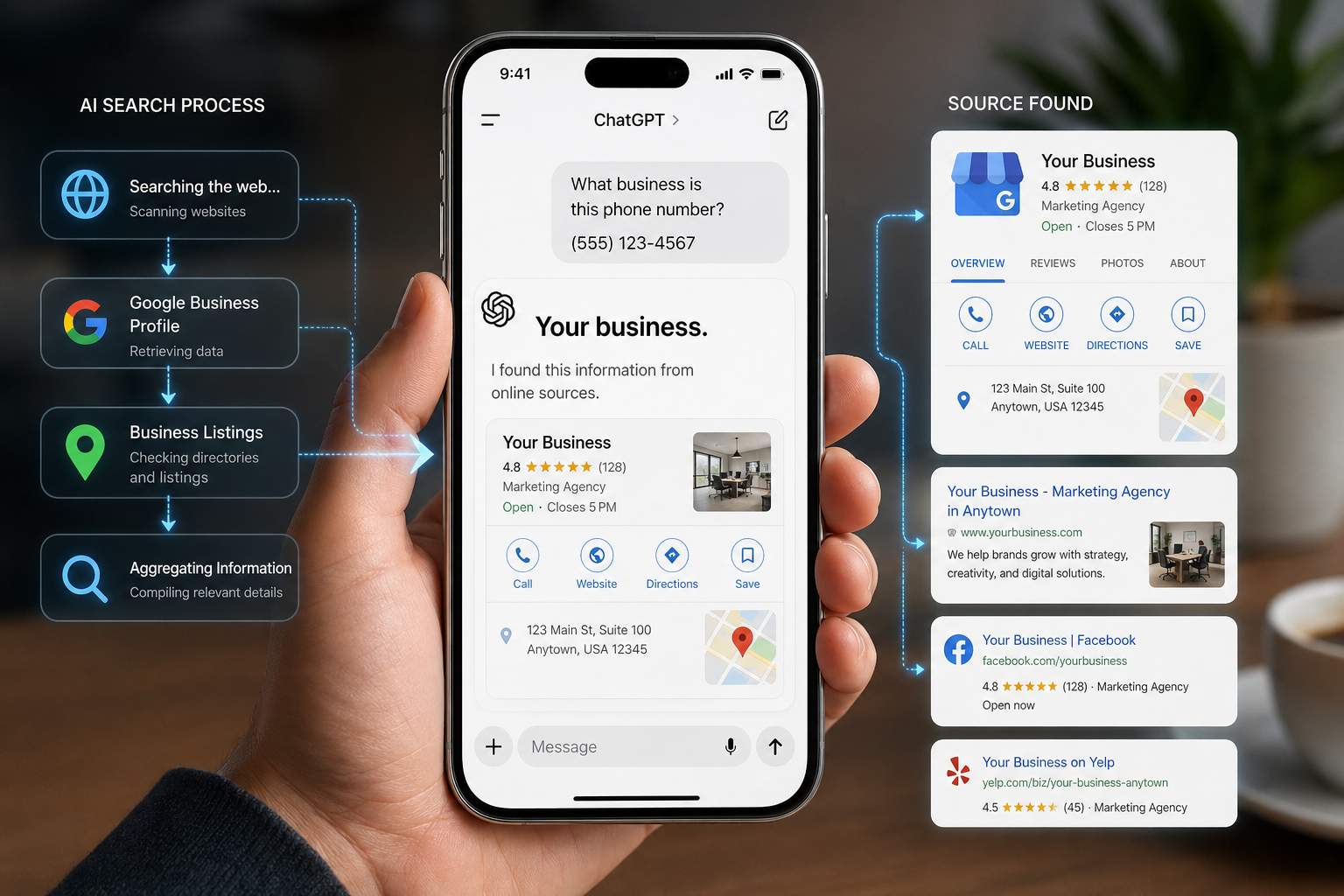

We build AI-ready content that matches the full language landscape of your services so large language models recognize your site as an authoritative source on your topic.
AI engines cross-reference your website against trusted sources. We align your Google Business Profile, directories, and brand signals so AI engines trust what they find and cite you with confidence.
Schema markup, proper heading hierarchy, internal linking, and content depth that AI engines can parse, trust, and cite in their generated answers.
The businesses that learn how to rank inside AI-powered search platforms are going to receive the high-intent opportunities everyone else misses. It is a blue ocean right now, with real territory still available for small businesses willing to act before everyone else catches up.
The biggest shift between traditional search and AI search is context. AI engines do not just match keywords. They synthesize. They read full queries with nuance, location, intent, and stakes. When someone asks ChatGPT about a service in their city, the model is reading the entire context of that question and building an answer from the most trustworthy, semantically clear sources it can find. Often, that includes your website. Or it does not include you at all.
Every time someone asks ChatGPT or Gemini (Google's AI Mode) about a business in your category, these AI platform don't magically know about your business, and guess the answer. Actually, they are pulling information from structured, credible sources, and your website one of the most important signals they use.
A well-optimized site tells the AI exactly what to communicate about your brand: your services, your expertise, your service area, your differentiators. You can write the script for what AI says about you. That is a real competitive advantage, and most small businesses have not acted on it yet.
AI SEO optimization, sometimes called Generative Engine Optimization or GEO, is the practice of structuring your website, content, and brand presence so that AI-powered search engines like ChatGPT, Gemini, and Perplexity can find, understand, and cite your business. It is the natural evolution of traditional SEO for an era where search engines no longer just rank links. They generate answers. For a deeper breakdown of how AI search rankings work and what small businesses can do about semantic content depth and brand verification, read our breakdown on how AI search rankings work and what small businesses can do.
As an AI SEO agency built for forward-thinking businesses, our work blends traditional SEO foundations with the new strategies AI search engines reward. The result is an AI SEO service designed to compound, not chase trends.

Our AI SEO services are built for forward-thinking small businesses that want to get ahead of where search is going, not scramble to catch up later. If you serve a local market, operate in a competitive space, or rely on search to generate leads, AI SEO is one of the most strategic investments you can make right now.
We work with businesses across the country. We are rooted in Southern California (Los Angeles, the Inland Empire, Rancho Cucamonga, Redlands, Orange County, the Coachella Valley) and work with businesses nationally that want to lead in their market.
AI engines are already answering your customers' questions. The question is whether they're mentioning you. Book a free consultation and let's find out where you stand.
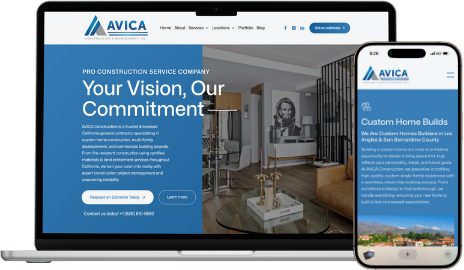
AVICA Construction had a strong reputation in the LA construction market built through years of solid work and referrals. But their online presence did not reflect any of that. Their old website was effectively a landing page, invisible in search, and could not credibly position the brand for the larger projects they were ready to take on.
We rebuilt the site on Webflow with semantic content architecture, schema markup, and brand citation alignment designed for both Google and AI-powered search. Within months of launch, AVICA's online authority improved 100% and web traffic grew over 200%, with the type of inquiries shifting toward larger, better-fit projects.
The website is now a credible, AI-ready authority for AVICA's market, exactly the kind of authority signal AI engines need to reference a business with confidence.
Visit the live site: avicaconstruction.com



Let's discuss your vision and how a design project can support goals.
Together we will determine the best course of action to help grow your business.
Leverage the systems we created to increase lead generation and facilitate a great customer experience!

The short answer: Yes, more than ever.
AI search leans tremendously on the same signals traditional search has always rewarded: domain authority, content depth, topical authority, brand consistency, and verified citations. AI did not invent a new set of rules. It deepened the existing ones, because now the AI also has to understand the full context of what your business is, who you serve, and why it should recommend you over the next business in line.
What changed is that the AI now reads your website directly to build its answer. That makes the content on your site, and the clarity of how you describe your business, more important than they have ever been. The brands that show up clearly, transparently, and consistently across the web are the brands AI engines reference with confidence. The brands that do not are simply not in the conversation.
This is a rapidly evolving space, and a lot of the rules are still being written. What we know is what already works: quality content, clear website strategy, consistent online presence, and a willingness to stay ahead of the changes as they happen. That balance, traditional SEO fundamentals combined with AI-ready content architecture, is what our AI SEO services are designed to deliver.
If you want your business to show up in the AI-powered search results your customers are already using, let's build that presence together.

AI search optimization — also known as generative engine optimization (GEO) or answer engine optimization (AEO) — is the process of structuring your website, content, and brand presence so that AI-powered search engines like ChatGPT, Gemini, and Perplexity can find, understand, and reference your business in their responses.
Traditional SEO focuses on ranking in search engine results pages. AI search optimization goes further — it’s about getting your brand cited, quoted, and referenced in AI-generated answers. This requires semantic content depth, brand consistency across the web, and structured information that large language models can parse and trust.
Semantic content architecture is the practice of building content that covers the full language landscape of a topic — not just primary keywords, but all the related terms, entities, and nuances that large language models associate with a subject. When your content speaks this semantic language, AI engines are more likely to recognize your site as an authoritative source and reference it in their answers.
AI engines cross-reference your website against other trusted sources to verify your brand’s accuracy and credibility. Your Google Business Profile is one of the most heavily weighted verification sources. When your GBP is consistent with your website, AI engines are more likely to trust your information and reference your business with confidence.
Yes — this is one of the most exciting opportunities right now. AI has significantly lowered the cost of creating high-quality, semantically rich content. Small businesses that invest in AI search optimization now can establish authority and visibility that compounds over time, often outpacing larger competitors who haven’t adapted their strategy yet.
Yes, with intentionality and oversight. We use AI tools to scale content creation efficiently, but every piece of content is reviewed and refined by our team to ensure it’s accurate, on-brand, and aligned with your business goals before it goes anywhere near your website or profiles.
Yes, and arguably more than ever. AI search engines like ChatGPT and Gemini read directly from websites to build their answers about your business. Your website is now the source AI uses to understand who you are, what you do, and whether to recommend you. The brands showing up clearly and consistently across the web are the brands AI engines reference with confidence. The ones without a clear, well-structured website are simply not in the conversation.
Getting cited by ChatGPT and other AI search engines comes down to three things. First, semantic content depth, meaning your website covers the full language landscape of your services, not just headline keywords. Second, brand verification across trusted sources like Google Business Profile, Yelp, Bing Places, and industry directories so AI can confirm your business is legitimate and consistent. Third, traditional SEO fundamentals like domain authority, schema markup, and topical authority. AI search leans tremendously on the same signals that have always made content rank.
Probably not. Google's most recent earnings showed Search and Other Advertising revenue grew 19% year-over-year, with queries at an all-time high, even with AI Overviews appearing on most results pages. AI search is not killing Google. It is changing how search works inside Google and across platforms like ChatGPT, Gemini, Claude, and Perplexity. The bigger shift is that businesses now need to optimize for both worlds at once, and the ones that do are the ones that will dominate online discovery over the next five years.
AI engines are already answering your customers' questions. The question is whether they're mentioning you. Book a free consultation and let's find out where you stand.



.png)

.png)