July 2, 2026

SEO for AI search engines is the new game. Here's what Google's AI Mode means for small business, and how to stay visible as Search shifts into a new era.

If you run a small business and rely on Google to bring you customers, you need to know what just happened.
At Google I/O 2026, Google announced what it's calling "a new era for AI Search," anchored by the rollout of Google AI Mode as the default Search experience. It's the biggest shift to how people find businesses online in over 25 years. The way customers search, compare, and choose who to hire is changing in real time. And the businesses that adapt are the ones that will keep winning.
The good news? At Colibri Systems, we've been watching this shift coming for a while. We've been quietly aligning our strategies, evolving our process, and preparing our clients' websites for exactly this moment, building SEO for AI search engines into the core of how we work.
Here's what's changing, what it means for service-based businesses, and what you should be thinking about right now.
Google rolled out a long list of updates, but here are the ones small business owners need to understand:
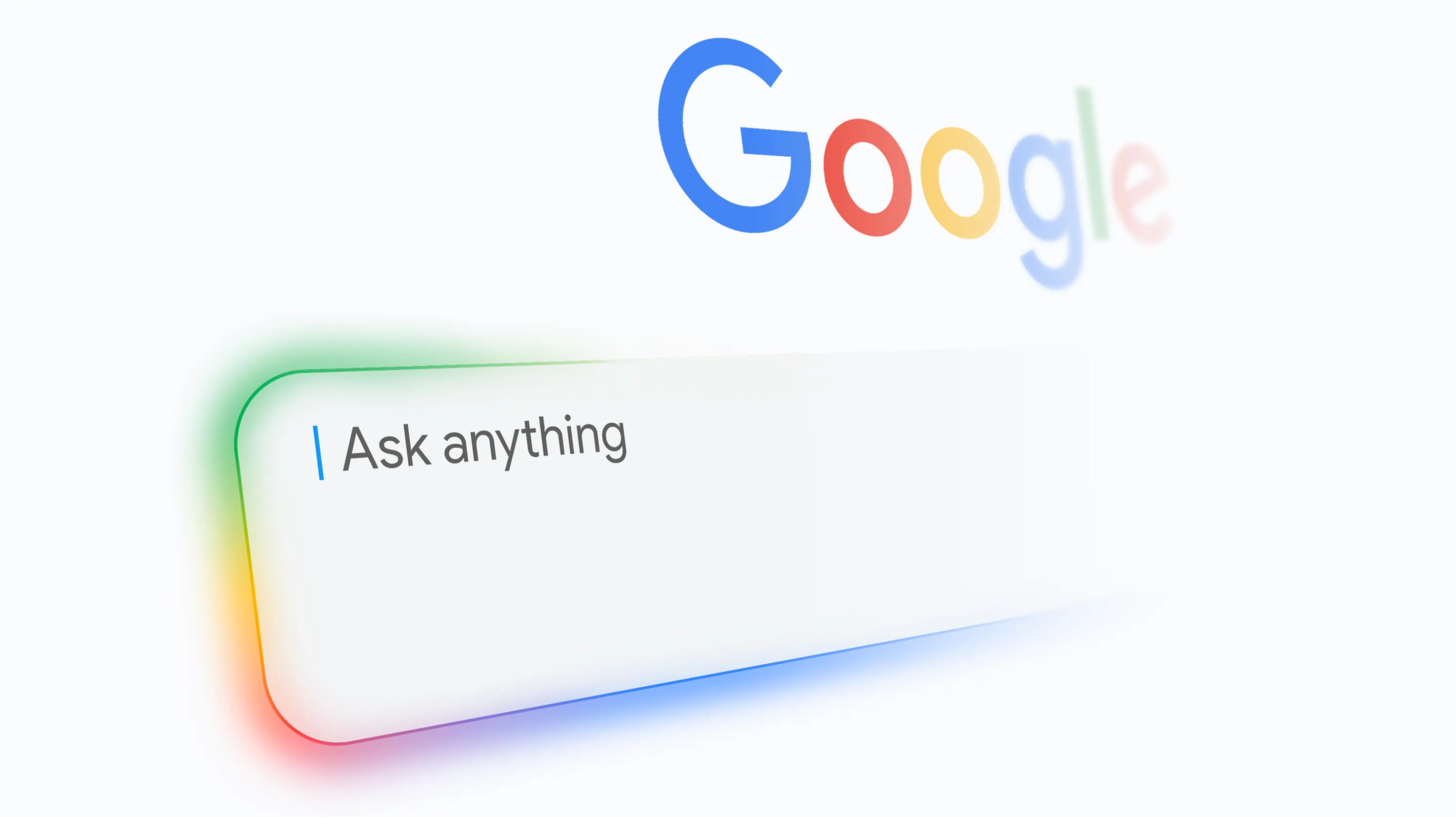
1. A reimagined, AI-powered Search box. It's not just a search bar anymore. You can now search using text, images, files, video, or even browser tabs. The box understands context, asks follow-up questions, and gives smart suggestions before you finish typing.
2. AI Mode is now mainstream. Powered by Gemini 3.5 Flash, AI Mode has crossed over 1 billion monthly users in just one year, and it's now the default experience in Search. People aren't scrolling through ten blue links anymore. They're reading AI-generated summaries that pull from multiple sources.
3. Information agents that work 24/7 in the background. Imagine a customer asks Google about "the best post-construction cleaning service in Santa Monica." Google can now set up an agent that monitors the web continuously, sending them updates as new businesses, reviews, or offers appear. That agent is now real.
4. Agentic booking for local services. This is the big one for service-based businesses. Google's AI can now book appointments, request quotes, and even call businesses directly on a user's behalf. The categories Google specifically named at launch are home repair, beauty, and pet care, with rollout to everyone in the U.S. this summer.
5. Personal Intelligence. Google can now connect a user's Gmail, Google Photos, and soon their Calendar, directly into Search. That means search results are increasingly tailored to who that specific person is, what they've already looked at, and what's already on their calendar.
There's more in the announcement, but those are the five that matter most if you own a local service business.
The full impact will reveal itself as these tools roll out, and we'll all be watching closely. But here's how we're thinking about it, and what's worth preparing for now.
This one isn't speculation. Google's agentic calling feature has been live in the U.S. since late 2025 for shopping searches. When a customer searches for products "near me," Google can call local retailers on their behalf to gather details on availability and pricing, then send the customer a summary.
At I/O 2026, Google announced that this same capability is expanding into local services this summer, starting with three specific categories: home repair, beauty, and pet care.
If you operate in those categories, the practical implication is that some of your incoming calls may now be from an AI assistant gathering information for a real customer. Whether other service verticals join the list (cleaning, landscaping, auto repair, mobile services) remains to be seen, but the direction is clear.
Why this matters strategically: Whether or not your category is in the first wave, the underlying message is the same. The cleaner, more accurate, and more transparent your business information is across the web (your hours, your service areas, your pricing structure, your booking process), the better any AI can represent you when a customer asks. And the better it represents you, the more likely it is to recommend you.
With AI Mode now the default experience for over a billion users globally, Google is increasingly synthesizing answers rather than just returning ten blue links. When a customer asks "who's the best electrician in Riverside?", Google is increasingly summarizing across multiple sources rather than handing them a list to sort through themselves.
The exact ranking signals AI Mode uses are not fully published, and they're still evolving. But based on how AI Overviews and AI Mode have behaved so far, the businesses that get summarized favorably tend to have a few things in common: complete and accurate Google Business Profiles, strong and recent reviews, clear and well-structured website content, and consistent information across every place a customer might find them.
Why this matters strategically: Being "findable" used to be the goal. Being summarizable is becoming the new goal. AI needs to be able to read your business, understand what you do, who you serve, and what makes you credible. And it needs to do that quickly and confidently. That's a different bar than ranking on page one.
This is the piece we're watching most carefully. Google is rolling out Personal Intelligence to nearly 200 countries and 98 languages, where users can connect Gmail and Google Photos to Search, with Calendar coming soon.
What this means for results is still unfolding. But the logical direction is that search results will increasingly be filtered through someone's personal context (what they've already booked, who they've emailed, what they've looked at), not just the keywords they typed.
For local service businesses, that points toward an environment where brand familiarity, consistency, and ongoing customer touchpoints likely matter more than ever. The business that shows up in a customer's inbox, on their reviews, in their feed, and on their Google Business Profile, consistently and credibly, has a much better chance of being the one AI surfaces when that customer searches.
We'll have a clearer picture in the coming months. For now, the safe bet is to keep building real signals of trust, presence, and authority around your brand.
Here's what a lot of business owners are going to miss in all the noise: the fundamentals of strong SEO still apply. They just matter more than ever now.
If your SEO strategy has been built around long-term authority and not gimmicks, you should see a smooth transition into this AI-first era without losing rankings in the process.
At Colibri Systems, we've already been building your foundation on the things that translate directly into how AI Mode and other AI search engines rank and recommend businesses:
These aren't new ideas. They're the same fundamentals we've been doubling down on for years, and now they're paying off harder than ever, because they're exactly what AI uses to decide who to recommend.
What is new is the emphasis on semantic richness and citing authoritative sources in our content. AI models don't just read for keywords anymore. They read for context, topical depth, and credibility. That's why our content strategy has been evolving to reference authority sources, build out full topic clusters, and signal expertise the way AI now expects.
We want to be straight with you: the full impact of these changes is still unfolding. Some of what we're laying out here is anticipation, not certainty. We'll be watching the terrain closely and adjusting as it shifts.
And here's something else worth knowing: these updates apply specifically to Google AI Mode. ChatGPT, Perplexity, Claude, and other AI search engines all rank websites and content using different rules. There's no single standard yet. There are similarities, but the landscape is still being written.
That's exactly why our team at Colibri Systems is dedicated to staying on the front lines of this. We're actively studying how each of these AI platforms reads, ranks, and recommends businesses. We're staying connected to some of the sharpest minds in the space. And our toolset already leverages LLM visibility insights, so we can pull out real signals and take real action on your behalf, across Google AI Mode and across the broader AI search ecosystem.
We don't have all the answers yet. Nobody does. But we're committed to being the kind of partner that's already one step ahead when the next shift comes.
Related reading: For a deeper dive into how AI search engines actually decide which businesses to reference, see How AI Search Rankings Work: And What Small Businesses Can Do Right Now to Get Referenced.
If you're already a Colibri Systems client: you don't need to do anything differently. This work is already in motion. The foundation we've been building is exactly the foundation this new era of search rewards.
If you're not a client yet, and you've been wondering whether your current SEO partner is paying attention to any of this, now's the time to ask.
This is an exciting moment in our industry. The businesses that take it seriously and prepare now are going to come out the other side stronger, more visible, and more competitive than ever.
We're glad we get to walk through it with you.
Have questions about how these changes affect your business specifically? Reach out anytime. We'd love to talk through it with you.
Know someone whose website is losing traction in this fast-changing AI landscape? Send them our way. We'd love to see if we can help them recover and thrive in this new era of search.